
Introduction
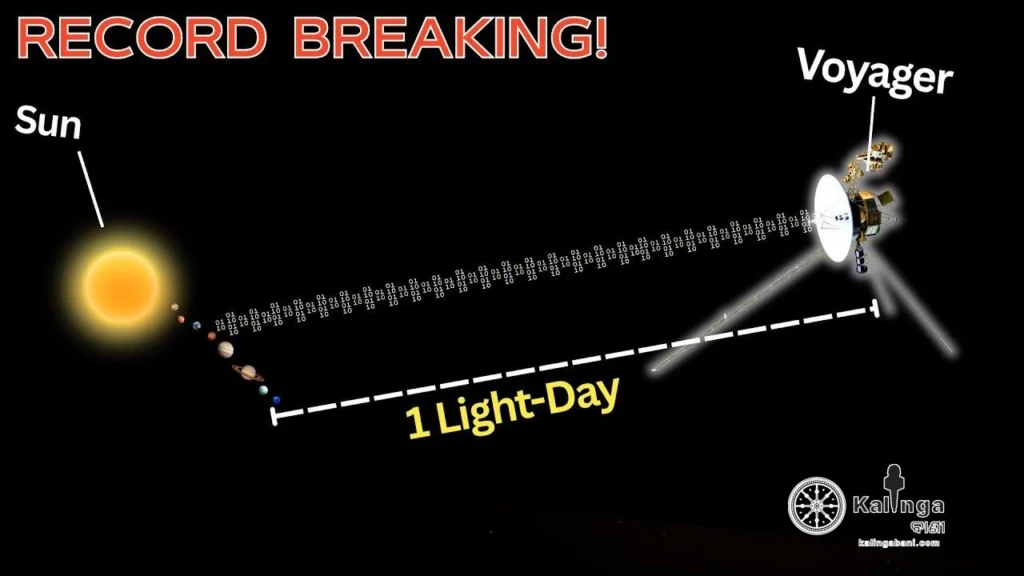
Bhubaneswar: Humanity has achieved another extraordinary milestone in space exploration. NASA’s Voyager 1 spacecraft has crossed a distance of one light-day from Earth, becoming the first human-made object to reach this remarkable distance in the history of space exploration.
The milestone was reached on November 18, 2026, when the spacecraft was approximately 25.902 billion kilometres (16.094 billion miles) from Earth. Nearly five decades after its launch, Voyager 1 continues to demonstrate how far human engineering, scientific ambition and technological innovation can reach.
A light-day is not a measurement of time in this context; it is a measurement of distance. It represents how far light travels in 24 hours, equivalent to approximately 25.9 billion kilometres or 16.09 billion miles.
Light travels at approximately 299,792 kilometres per second. Even at this extraordinary speed, a radio signal travelling from Earth to Voyager 1 now needs approximately 24 hours to reach the spacecraft.
The same delay applies to the return journey. This means that when mission controllers send a command to Voyager 1, they may have to wait approximately another full day after its arrival before receiving a response.
This creates a remarkable communication challenge for NASA engineers. Unlike spacecraft operating closer to Earth, Voyager 1 cannot be monitored or controlled through an almost immediate exchange of information.
- Distance from Earth: Approximately 25.902 billion kilometres.
- Equivalent distance: One light-day.
- Light speed: Approximately 299,792 kilometres per second.
- One-way communication delay: Approximately 24 hours.
- Round-trip communication delay: Approximately 48 hours.
The milestone is particularly significant because no other human-made object has travelled this far from Earth. It represents an extraordinary achievement in engineering, navigation and long-duration space exploration.
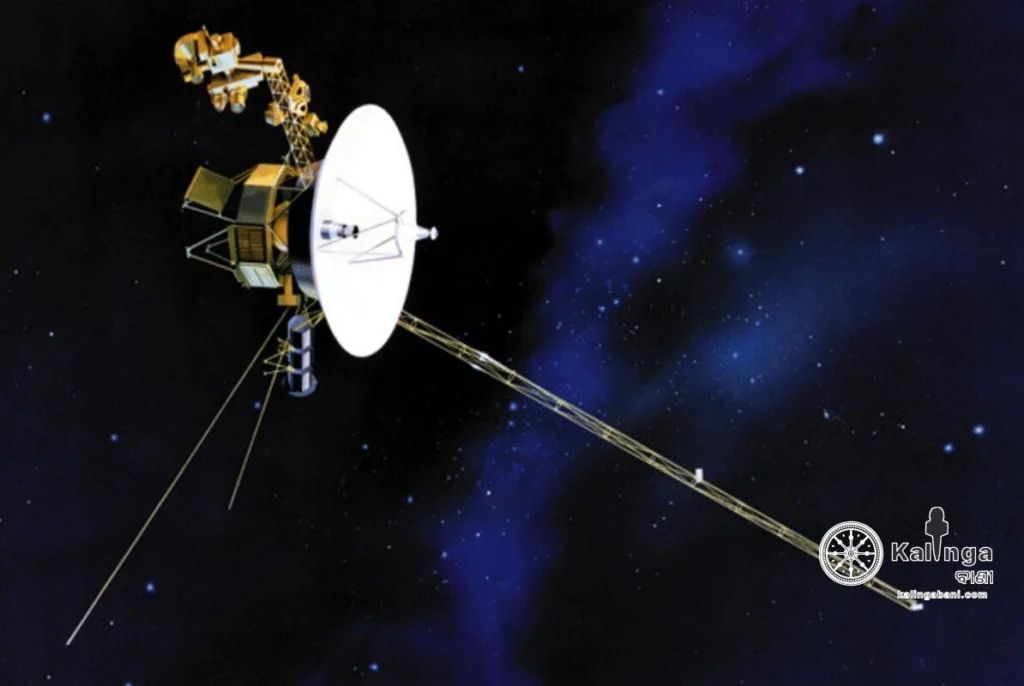
NASA launched Voyager 1 in 1977 as part of an ambitious planetary exploration programme. Its original mission focused on studying Jupiter and Saturn, helping scientists understand the outer planets, their moons, atmospheric conditions and surrounding environments.
The spacecraft delivered valuable observations of these distant worlds and continued travelling beyond its original planetary objectives. Its journey eventually took it beyond the Sun’s protective region and into interstellar space.
In 2012, Voyager 1 became the first spacecraft to enter interstellar space by crossing the heliopause, the outer boundary of the heliosphere. This region marks the transition beyond the protective bubble of particles and magnetic fields generated by the Sun.
Its twin spacecraft, Voyager 2, followed a different trajectory and entered interstellar space in 2018. Together, the two spacecraft have provided scientists with an unprecedented opportunity to study the environment beyond the Sun’s influence.
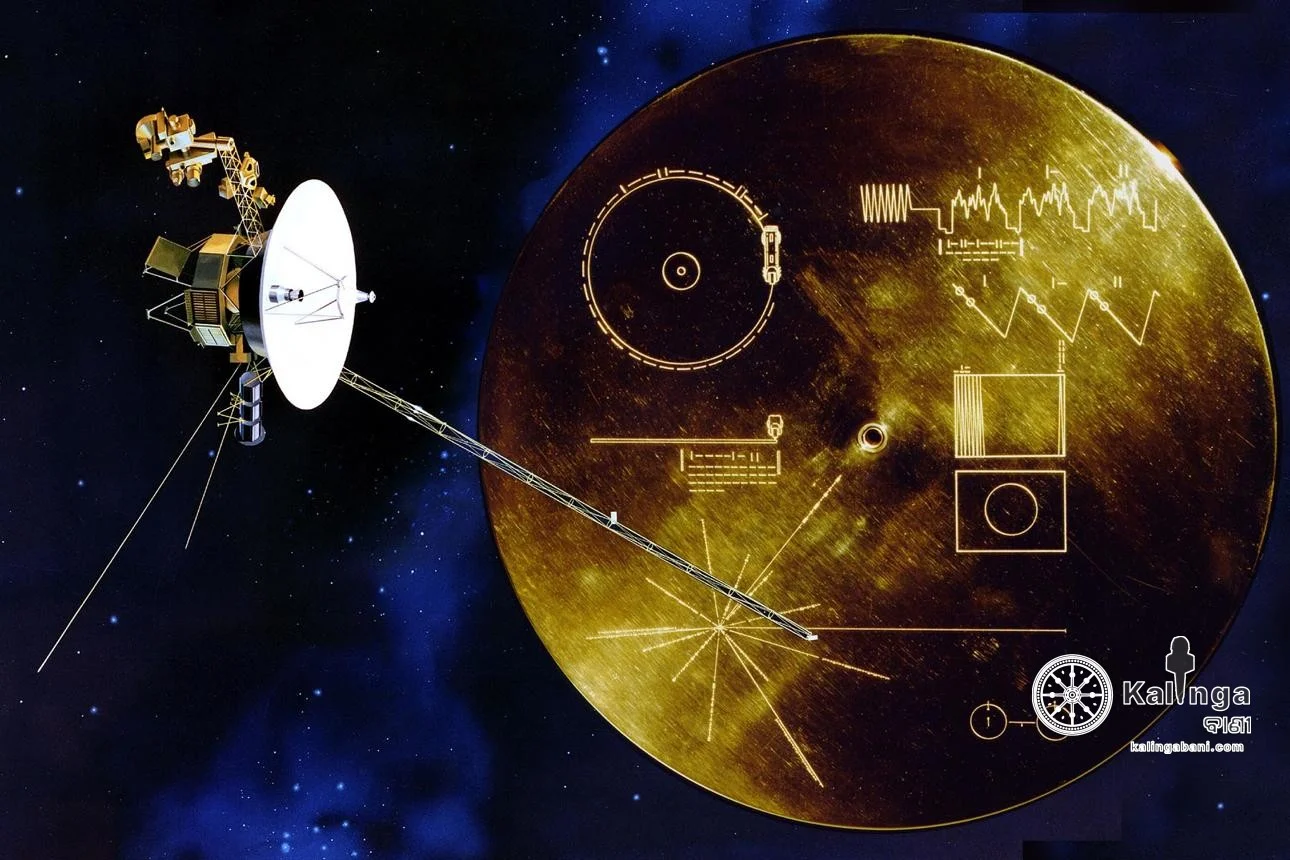
One of the most fascinating features of the Voyager mission is the Golden Record carried by both spacecraft. These gold-plated records contain sounds and images representing Earth, including natural sounds, spoken greetings in different languages and examples of human culture.
The records were designed as a symbolic message from humanity to any potential intelligent life that might encounter the spacecraft in the distant future. Their contents reflect the diversity of life and civilisation on Earth.
The Golden Record makes Voyager more than a scientific instrument. It represents an attempt to preserve a small introduction to humanity aboard two spacecraft travelling beyond our immediate cosmic neighbourhood.
Nearly 50 years after launch, these messages continue travelling through interstellar space alongside the spacecraft.
While the one-light-day milestone is a remarkable success, NASA is also dealing with a technical problem involving Voyager 1. According to the agency’s November 18 update, the mission team discovered on November 14 that the spacecraft had stopped transmitting its science and engineering data.
However, NASA’s Deep Space Network successfully detected a carrier signal from the spacecraft. This is an important distinction because the signal indicates that Voyager 1’s antenna and broadcasting equipment are still functioning, even though the expected scientific and engineering information is not being received.
Mission engineers are investigating the cause of the problem. NASA has suggested that the issue may involve the onboard computer responsible for collecting information from the spacecraft’s various systems and preparing it for transmission.
A similar problem occurred in 2023, when Voyager 1 transmitted a carrier signal without providing usable engineering and scientific data. That earlier incident was traced to an onboard computer issue, and the experience may help engineers investigate the current situation.
NASA’s mission team has calculated the spacecraft’s position using trajectory models based on years of measurements. Since Voyager 1 is following a known trajectory and travelling at a consistent speed, engineers can determine when it reaches the one-light-day distance even while its science-data transmission is interrupted.
NASA stated on November 18 that it expected to confirm the milestone on November 19 using the carrier signal and trajectory calculations. The agency also planned to mark the achievement after receiving the relevant signal from the distant spacecraft.
The communication delay makes troubleshooting particularly difficult. A radio signal takes approximately 24 hours to travel in either direction, meaning that engineers cannot expect an immediate response when they send instructions or request information.
Importantly, crossing the one-light-day boundary does not mean Voyager 1 has suddenly experienced a physical change. The milestone is significant because of the extraordinary distance and the communication challenge it represents.
Voyager 1 continues travelling farther away from Earth, but its remaining operational lifetime is an important concern for NASA. The spacecraft depends on a limited power supply, which gradually declines over time, forcing engineers to manage electricity carefully and switch off selected systems when necessary.
NASA has been implementing power-saving measures to extend the mission’s useful life. These efforts are intended to preserve the spacecraft’s ability to communicate with Earth and collect scientific measurements for as long as its remaining power and equipment allow.
The spacecraft’s historic achievement does not mean its journey is over. Even if it eventually loses the ability to communicate, Voyager 1 will continue moving through space along its existing trajectory.
For scientists, the mission remains valuable because it has helped reveal the conditions of interstellar space and expanded humanity’s understanding of the boundary between the Sun’s influence and the wider galaxy.
The one-light-day milestone is therefore more than a distance record. It is a powerful reminder that a spacecraft launched in 1977 can still capture the world’s attention nearly half a century later, demonstrating the extraordinary possibilities of human curiosity and scientific exploration.
| Key Information | Details |
|---|---|
| Spacecraft | NASA Voyager 1 |
| Launch Year | 1977 |
| Historic Milestone | One light-day from Earth |
| Milestone Date | November 18, 2026 |
| Distance from Earth | Approximately 25.902 billion kilometres |
| Speed | Approximately 61,000 km/h |
| Entered Interstellar Space | 2012 |
| One-way Signal Travel Time | Approximately 24 hours |
| Round-trip Communication Time | Approximately 48 hours |
| Latest Communication Status | Carrier signal detected; science and engineering data transmission issue under investigation |
Q1. When did NASA’s Voyager 1 reach one light-day from Earth?
Answer: Voyager 1 crossed the one-light-day distance milestone on November 18, 2026, becoming the first human-made object to reach this distance from Earth.
Q2. How far is one light-day in kilometres?
Answer: One light-day is approximately 25.9 billion kilometres, representing the distance light travels in 24 hours.
Q3. How long does communication with Voyager 1 take?
Answer: A radio signal takes approximately 24 hours to travel from Earth to Voyager 1. A complete communication exchange, including the return signal, takes approximately 48 hours.





Leave a Reply